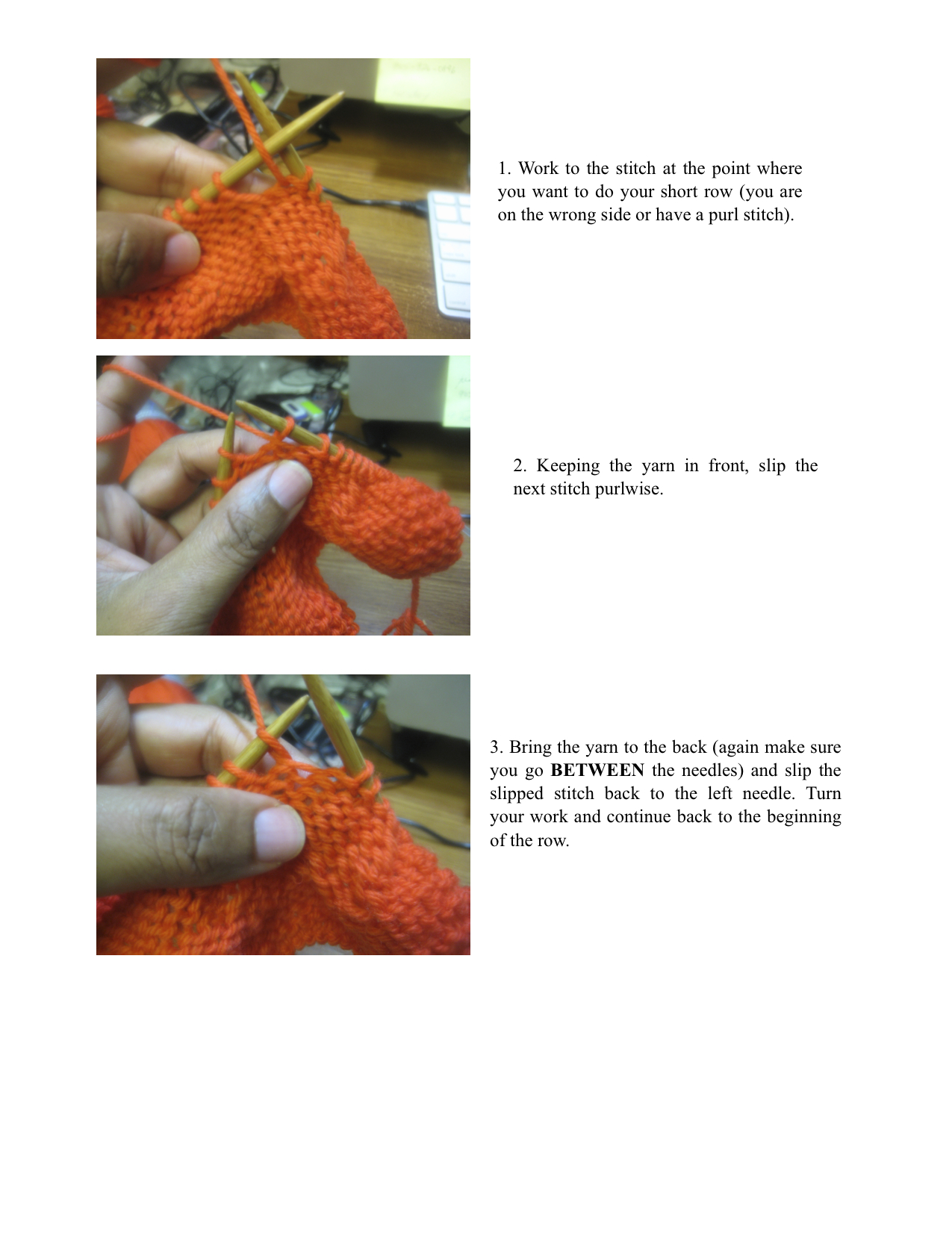
Thank you if you’ve had the patience to stick out this knit-a-long with me. By now you may have finished the first set of straps of the back. If you haven’t don’t worry, that may be a good thing. You’ll have noticed that there is some short row shaping in the back of this garment. Silly me, I should have done this post before going on, but you know what they say – better late than never. So here is a review of how to do short rows. The concept is simple – you only work part of your row, then turn and go back. The purpose of this is varied, but in this instance it creates a slope where you have more fabric on one side than the other. If you look at the previous post about this top you’ll see what I mean. The problem with simply turning and knitting back though is that you’ll end up with a hole if you don’t address the issue. This is solved using a technique that has been around for a while called the wrap and turn. In doing this you wrap the yarn around the base of the stitch and then work it into that same stitch when you meet up with it the next time. Here are some pictures explaining the technique. First on the right side of the work or when you’re short turning a knit stitch …

And this is how you do short rows on the wrong side or when you have a purl stitch …
The actual wrapping and turning isn’t all there is to short rows though. That part is essential to ensure that you don’t get a hole, but unfortunately it leaves a bar on the right side of the work where the yarn is getting wrapped around the base of the stitch. In order to get rid of this bar, you’ll need to work it with the stitch it is wrapped around when you encounter it the next time. On the knit stitches it’s quite easy, and you simply insert the tip of your right needle through the wrap and the stitch and knit them together. It’s quite similar to doing a K2tog decrease. Here’s a picture of what I mean …
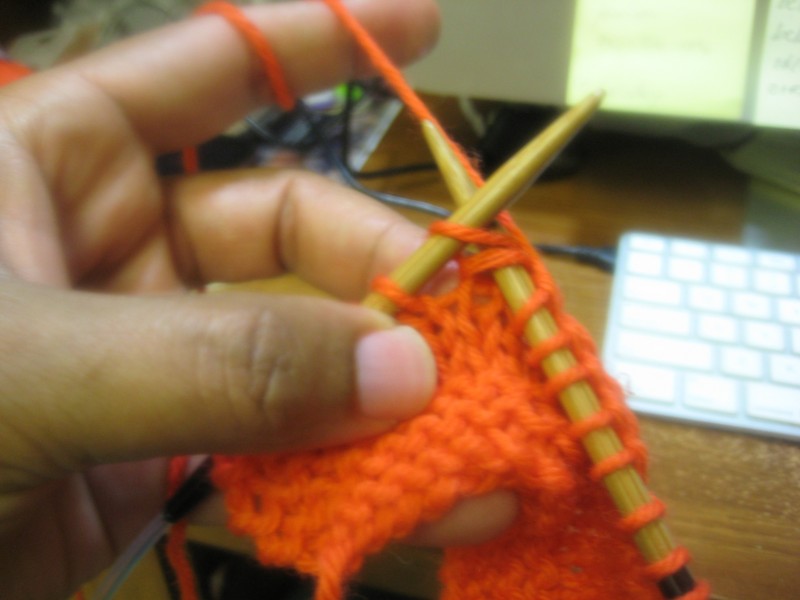
The loop at the bottom of the right needle is the wrap and the top loop is the stitch it is wrapped around. When you knit these together, it looks like just one stitch and the wrap is very efficiently taken care of. The great thing is there is no hole in your work to show that you’ve done a short row. The purl side is a little different. When you come to the wrap, you need to insert your right needle into the wrap from the back and pick it up and place it on your left needle beside the stitch it’s wrapped around. Here’s a picture of what I mean …
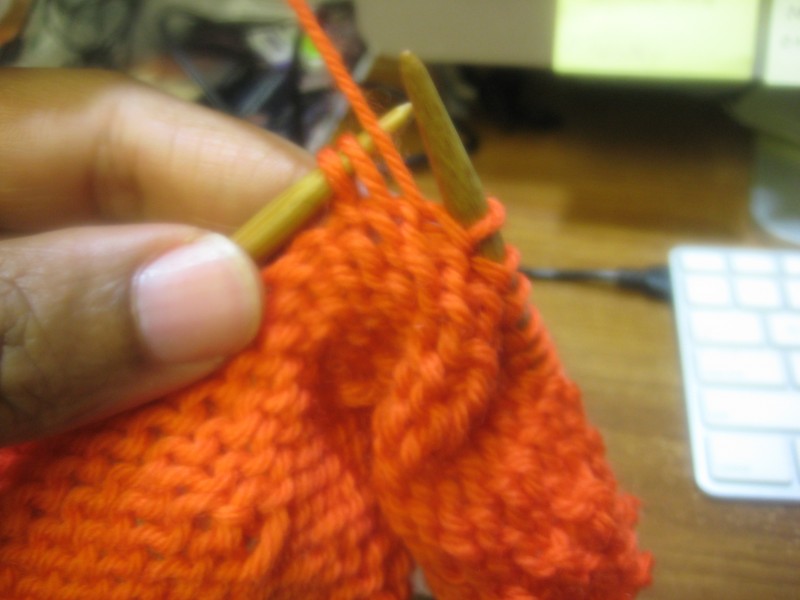
It’s a little tricky to see from this photo, but the wrap is the loop that is on the right of the left needle, and the loop on the left is the stitch it’s wrapped around. At this point you purl the two together and you’ve dealt with the wrap on the wrong side or from a purl stitch. It’s important to be able to do both as in this pattern you’re doing this technique on a 2×2 rib. If you haven’t done this before, try it with a small swatch of stocking stitch fabric. Do a few short rows on the right side, then the wrong. Once you have the knack of it, do it for this project.
So here is the top after doing the straps and then using short rows to rejoin the straps. You’ll notice in the close up the difference on the edges of the individual straps that the selvage edge makes. Your ribs are the same size as those called for in the pattern (14 stitches), but you only rib 12 of them. The extra 2 are used to create the selvage by slipping the first one purlwise, and knitting the last on on each strap. Once you go back to rejoining them, you just work the selvage stitches into the rib!
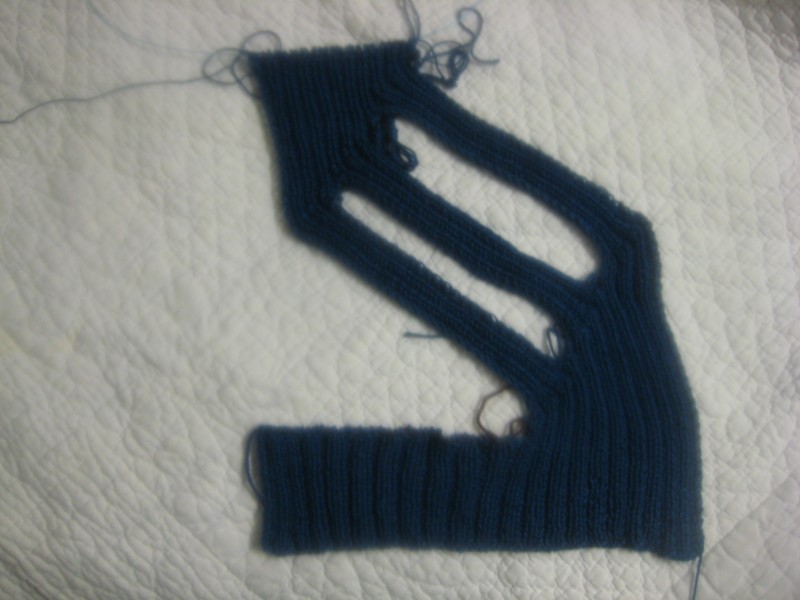
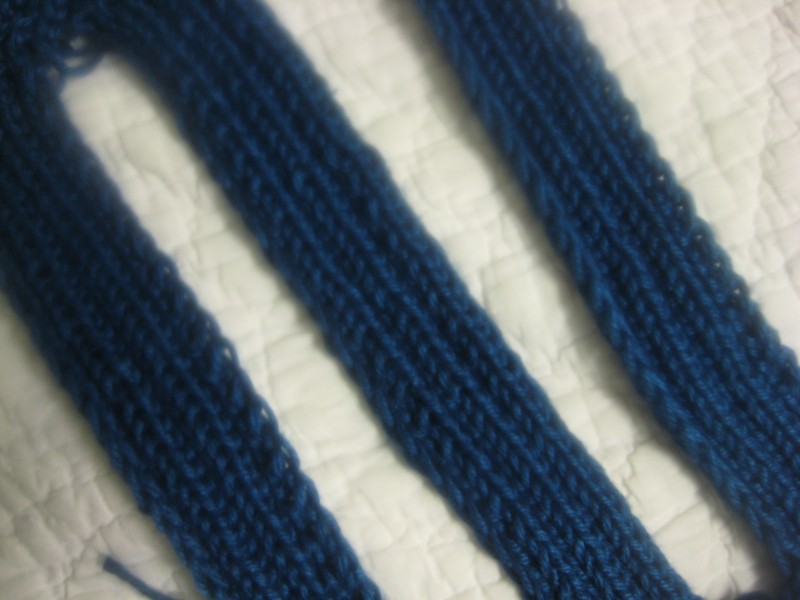
Now we’re going to continue on with this part of the back and create the straps that go over the shoulder and join the bra cups on the front. After that we do the other side and start our finishing!
Hugzzz 😎