Well, you’d think I’d know better by now. Remember my post on 10 tips to make you a better knitter? If you haven’t read it – click this link (10 TIPS) to see it. You’ll notice that tip #9 is about blocking. I mentioned blocking your work when working with natural fibers. Well, sometimes it’s necessary to block your work when working with processed, synthetic, or non-natural fibers as well. I should also note that you may even want to go as far as washing your swatch in the manner that you plan on washing the finished article to see what happens to it. Hopefully, if you’re working from a pattern the designer will have done all this and as well as advising you about it, they’ll tell you what to expect. I know that I will be doing this for everything in the future – starting with my Jamaican Gold sweater I’m designing and knitting for the knitting Olympics. I’m off to do that right now!
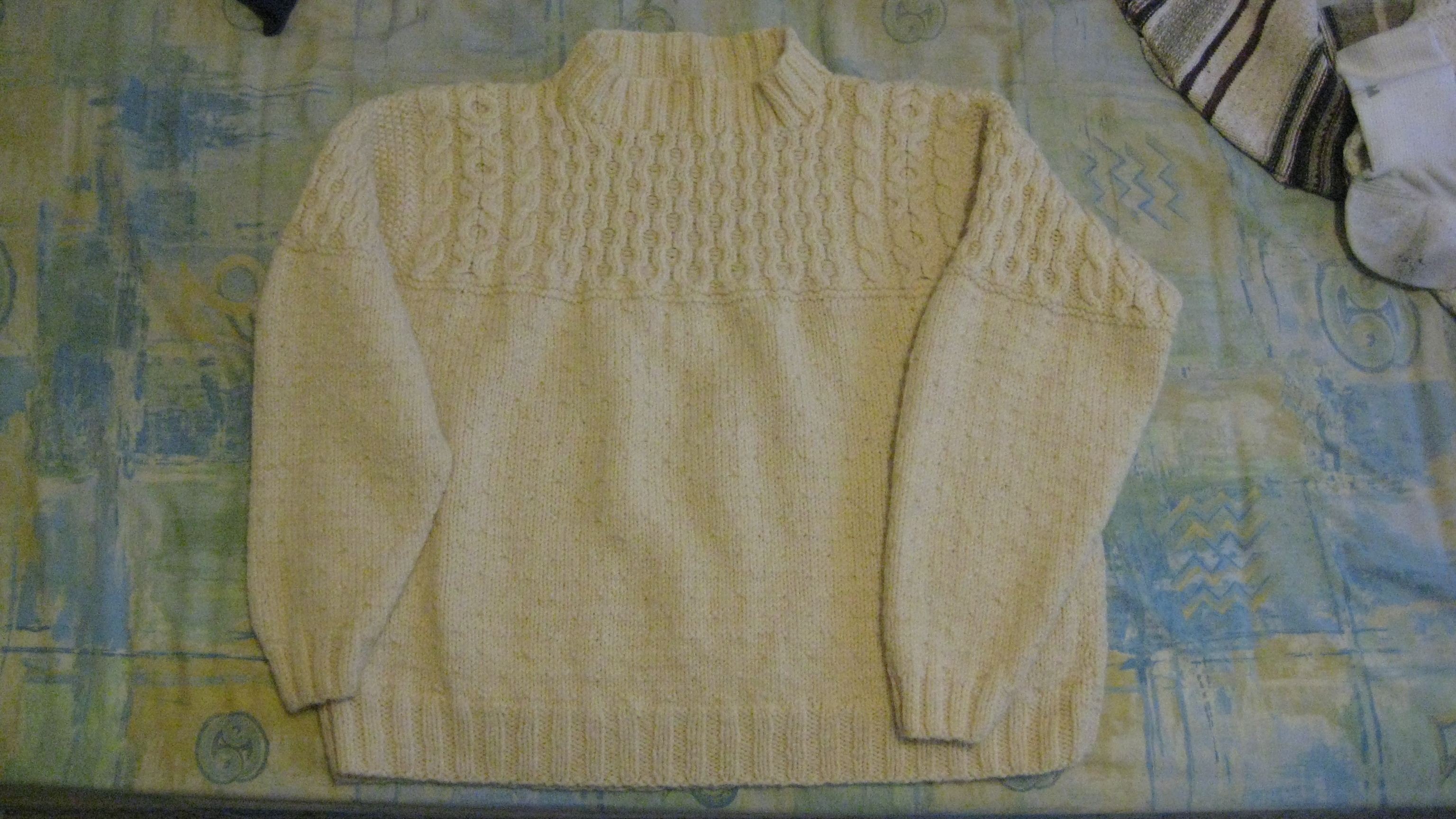
The sweater after washing and drying - a little larger than before.
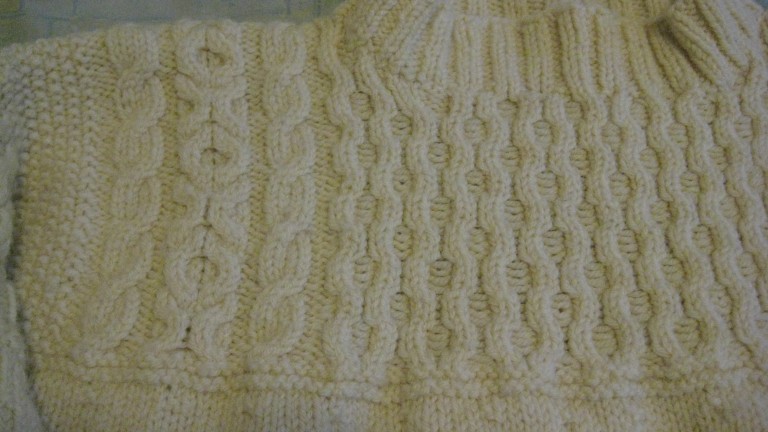
So what has brought on this enlightenment you might ask? Well, remember the Guernsey that I made a couple of weeks back? Again, if you didn’t see the post, click this link (Guernsey). I was quite happy with it and liked the way it came out – I was even a little disappointed that I hadn’t made it in a size for myself. Well, I decided to wash it yesterday. I used a wool by Nashua called Creative Focus Superwash. According to the label it is washable in the machine with cold water. I did this but was very surprised as to how much it relaxed during the process. The Honeycomb cables had opened up considerably (usually it’s the opposite effect – small gaps where you didn’t tighten the cable enough actually close up) and the purl stitches were straight horizontal lines in the sweater. and the X-O cable had a vertical line going down the middle. The care instructions for the yarn say to lay flat to dry but I wanted to try and possibly tighten this back up a bit. Well it worked – a little.
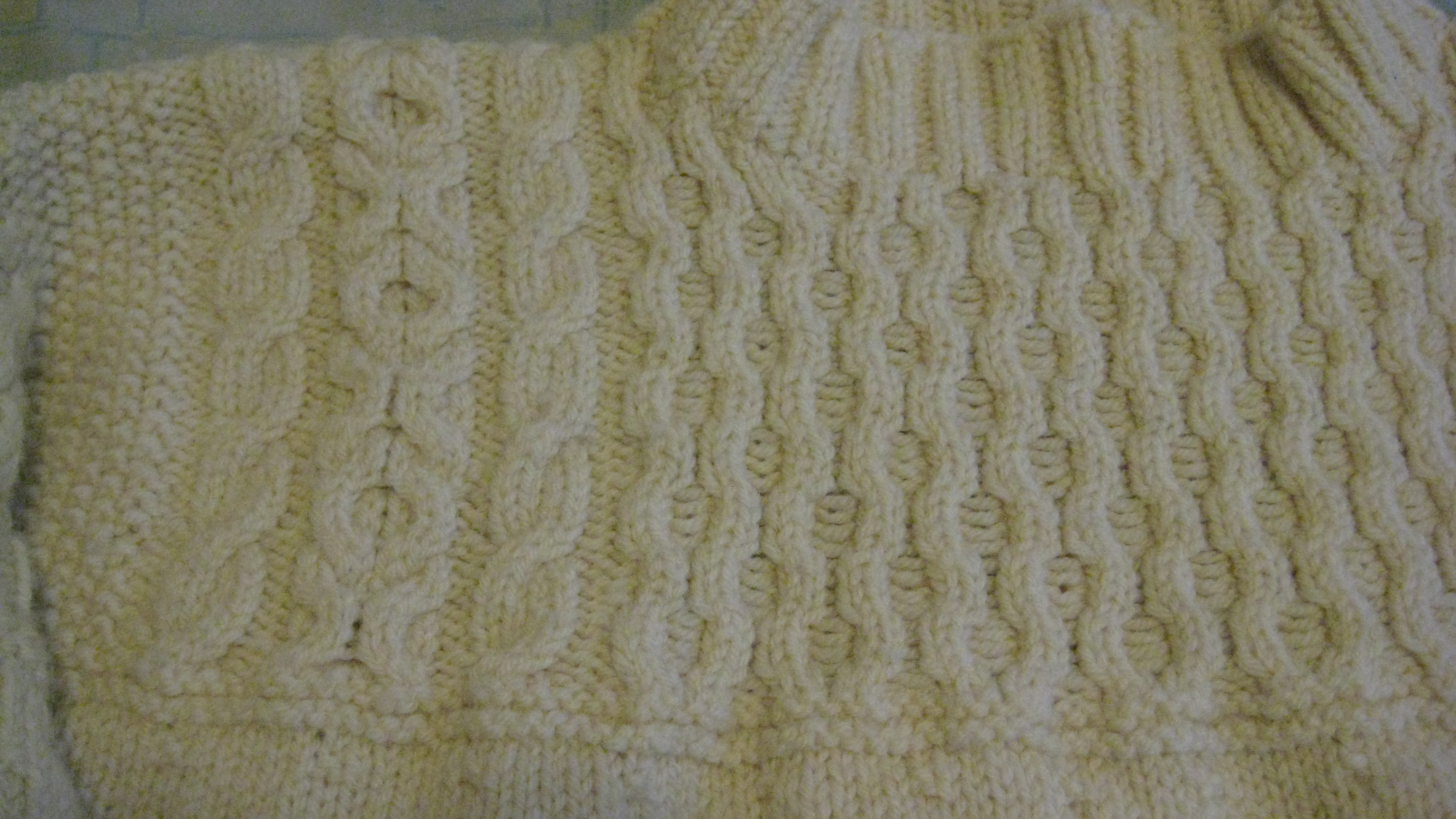
A close up showing the vertical line in the X-O cable and the separation of the Honeycomb cable.
I am still not entirely satisfied with the results but it does look a lot better than when I had first taken it out of the washer. The washer I used is a front loading model and was on a gentle cycle so I don’t think it was a major factor in the results. One good thing that I haven’t mentioned yet though is the yarn is considerably softer after being washed – almost Alpaca soft! Next time I’ll try knitting it with a smaller needle.
Well, one of the reasons for this blog is so that you can learn some things – from my mistakes. This should be one of those things. It’s all about time and effort. You’ll remember me saying that I won’t sell a scarf for $20 because of the time and effort i put into it, right? Well, you can also add that I won’t NOT block and wash a swatch as well for the same reason – especially when working on a new design or with a new yarn. The couple of hours put into doing the swatch and then blocking and washing it is well worth the satisfaction of having what you designed in the end – with no surprises. I mean, we all like surprises – but only when they come wrapped up in a box with a bow on top!
Hugzzz 😎